History Of Koutoubia Mosque
From the Almohad conquest of Marrakech to the most iconic silhouette on the city's skyline — the story of the Koutoubia.
The Name: Mosque of the Booksellers
The name Koutoubia — from the Arabic 'kutubiyyin', meaning booksellers — recalls the open-air manuscript market that once surrounded the mosque. In the 12th century this quarter of Marrakech was the city's centre of learning and the book trade, and the mosque took its name from the merchants who worked in its shadow.
The Almohad Conquest
After the Almohad dynasty conquered Marrakech from the Almoravids in 1147, Caliph Abd al-Mu'min ordered the construction of a great mosque on the site of the former Almoravid palace. The first mosque was completed quickly, but it was soon demolished because its prayer hall was not oriented precisely enough toward Mecca.
The Second Mosque
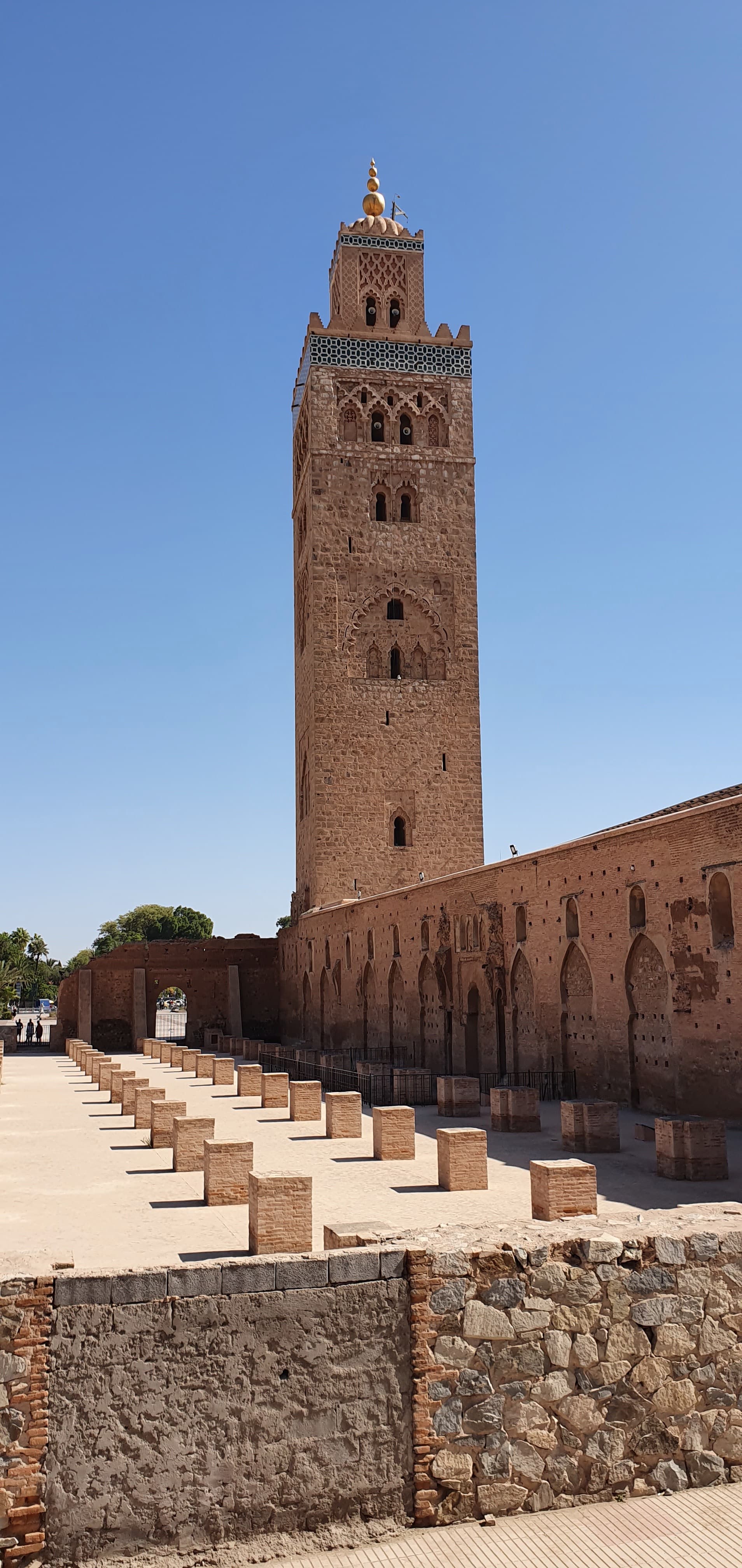
A second, correctly aligned mosque was built alongside the ruins of the first, and this is the Koutoubia that stands today. The prayer hall covers a vast area, with 17 aisles separated by rows of horseshoe arches resting on 112 white pillars. Construction was completed around 1158 under Abd al-Mu'min.
The Minaret
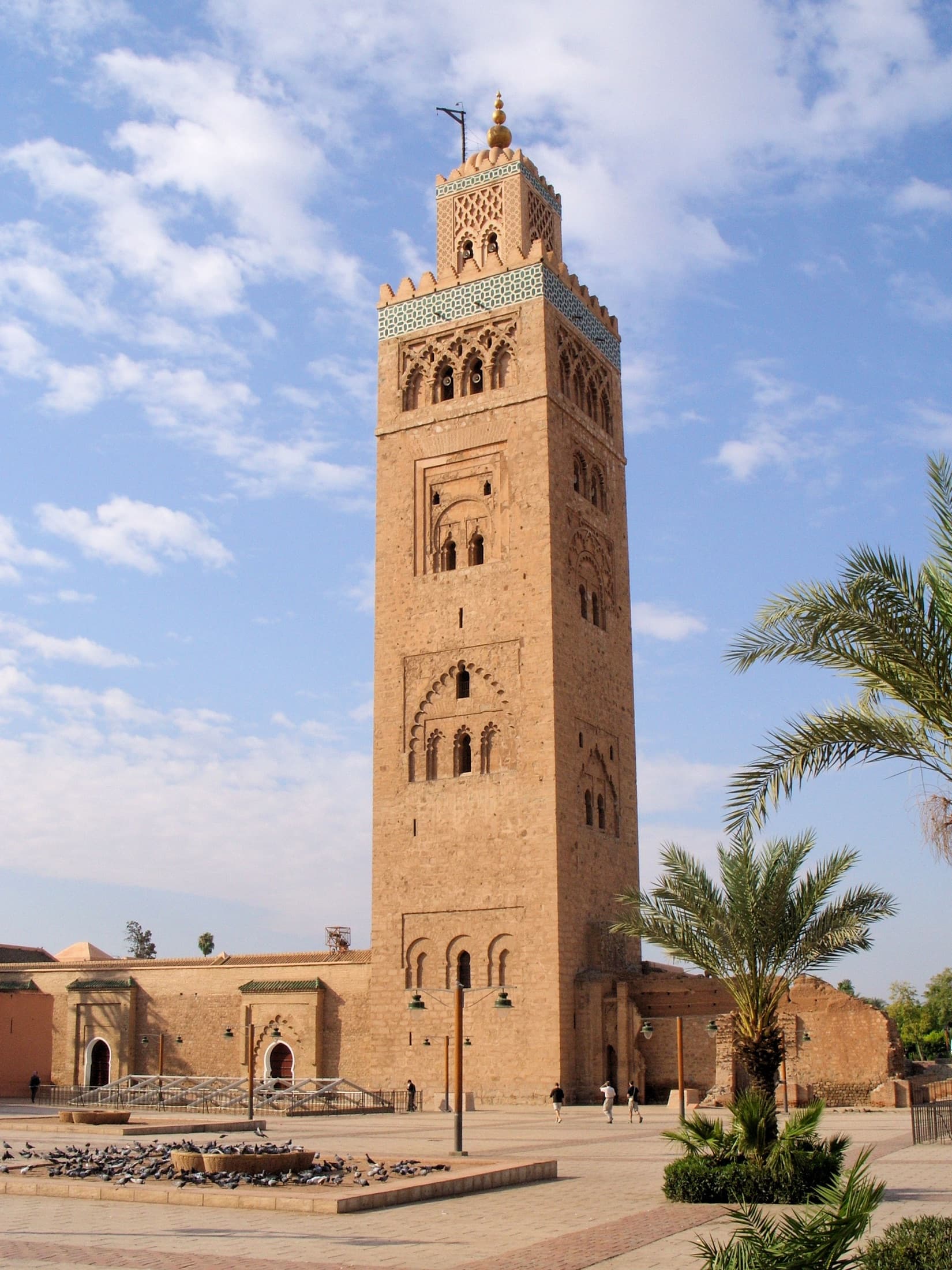
The Koutoubia's square minaret, the defining symbol of Marrakech, rises 69 metres (77 metres including the copper finial and its four golden spheres, the 'jamour'). Begun under Abd al-Mu'min and completed around 1195 under Yaqub al-Mansur, each of its four faces bears a different pattern of carved stone, darj-wa-ktaf blind arcading, and ceramic inlay — a design that became the template for the Giralda in Seville and the Hassan Tower in Rabat.
A Model for Three Cities
The Almohad caliphs built the Koutoubia, the Giralda, and the Hassan Tower as a trio of sister minarets across their empire. The Koutoubia was the first and the model: its proportions — height roughly five times the width — and its tiered arcaded decoration were reproduced in Seville and Rabat, making it one of the most influential minarets in Islamic architecture.
UNESCO Recognition
The Koutoubia Mosque sits within the Medina of Marrakesh, which UNESCO inscribed as a World Heritage Site in 1985 in recognition of its exceptional architecture and urban heritage dating back to the Almoravid founding of the city in the 11th century. The mosque's Almohad minaret is one of the most recognisable monuments in that heritage.
The Koutoubia Today
The Koutoubia remains an active mosque, calling the faithful to prayer five times a day. No building in Marrakech is permitted to rise above its minaret, ensuring it is still the first thing visitors see on the skyline. The surrounding gardens — the Koutoubia Gardens and Lalla Hasna Park — are a favourite gathering place for locals and tourists alike, especially at sunset when the sandstone glows amber.